
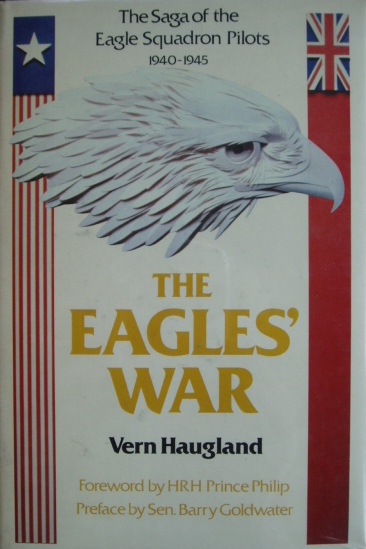
The EAGLES’ WAR
The Saga of the Eagle Squadron Pilots 1940-1945
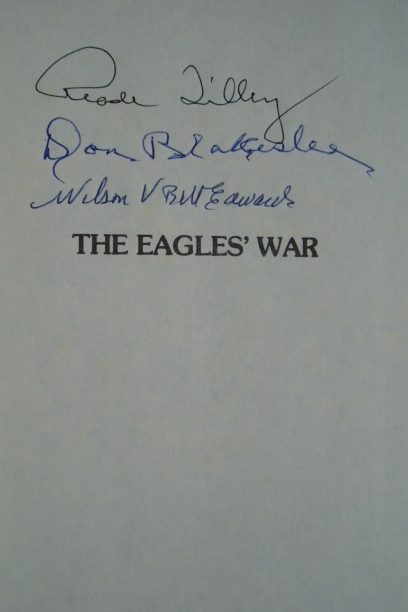
Multi-Signed
Signed by Eagle Squadron pilots on the front end paper
Reade Tilley ~ 121 Squadron
Don Blakeslee ~ 133 Squadron
Wilson Edwards ~ 133 Squadron
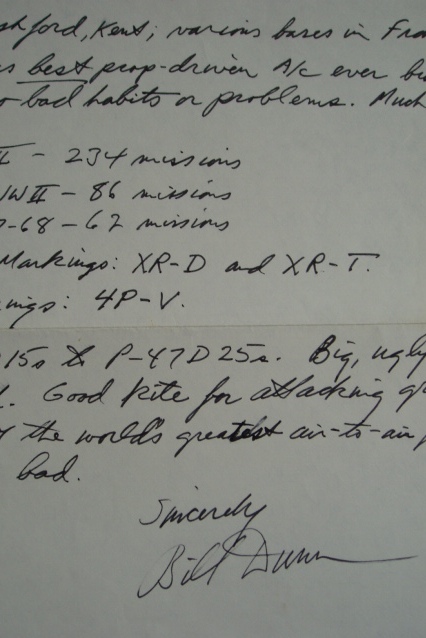
+ interesting handwritten biographical letter from
Bill Dunn ~ 71 Squadron
Jason Aronson First Edition 1982. 234 pages and well illustrated with photos.
Fine condition hardback book in a Fine condition condition dustjacket.
Whilst the RAF was facing the onslaught of the Luftwaffe in the dark days of 1940, from all over America some 240 pilots made their way to England in search of adventure and to fight for freedom. Many of them died while serving the cause.
These American units became known as the ‘Eagle Squadrons’ and in quick time they were embraced by the RAF and the free world as heroes and symbols of young American courage, skill and dedication. They set an example for the American aces to come – the first Yanks to fight the Axis.
This is their story told from contemporary accounts, logbooks, official records and by the Eagles themselves. With the signatures of 4 Eagles representing the 3 Eagle Squadrons, this is a cracking book for anyone interested in this fascinating subject.
Reade Tilley
Reade Tilley was a Florida‑born adventurer who joined the RAF in 1940, driven by a fierce opposition to fascism and a lifelong love of flying. Assigned to No. 121 Eagle Squadron, he quickly proved himself a bold and aggressive pilot, earning a reputation for coolness under fire. Tilley flew Spitfires on offensive sweeps over France and took part in the RAF’s growing air offensive in 1941–42. After the Eagle Squadrons transferred to the USAAF, he continued his combat career with the 4th Fighter Group, eventually rising to command positions. Decorated by both Britain and the United States, Tilley remained one of the most respected and articulate voices of the Eagle Squadron legacy.
Don Blakeslee
Don Blakeslee, an Ohio native and former barnstormer, became one of the most formidable fighter leaders of WWII. He joined the RAF in 1940 and flew with No. 401 Squadron before transferring to the Eagle Squadrons, where his relentless drive and uncompromising standards set the tone for No. 133 Squadron. Blakeslee excelled in the transition to the USAAF, becoming the legendary commander of the 4th Fighter Group. Under his leadership, the group became one of the highest‑scoring in the European Theatre. Known for his icy calm, tactical brilliance, and intolerance for anything less than total commitment, Blakeslee emerged as one of America’s greatest fighter commanders.
Wilson Edwards
Wilson Edwards was a Texan who joined the RAF in 1941 and was posted to No. 121 Eagle Squadron. A steady, dependable pilot, Edwards flew Spitfires on cross‑Channel sweeps and bomber‑escort missions during the RAF’s lean and dangerous offensive period. He was admired for his quiet professionalism and willingness to take on the most demanding sorties. Edwards transferred to the USAAF with the rest of the Eagles in 1942, continuing to serve with distinction. Though less flamboyant than some of his comrades, he embodied the grit and reliability that defined the Eagle Squadrons.
William “Bill” Dunn
William Dunn holds the distinction of being the first American ace of the Second World War. Born in Minnesota, he enlisted in the Canadian Army before transferring to the RAF, where he joined No. 71 Eagle Squadron. Dunn’s aggressive flying style and sharp marksmanship brought him rapid success during the intense air fighting of 1941. Wounded later that year, he returned to the United States and continued his service as an instructor and USAAF officer. Dunn’s memoirs and later writings helped preserve the story of the Eagle Squadrons, and his status as America’s first ace of the war made him one of their most enduring figures.